Zipkin
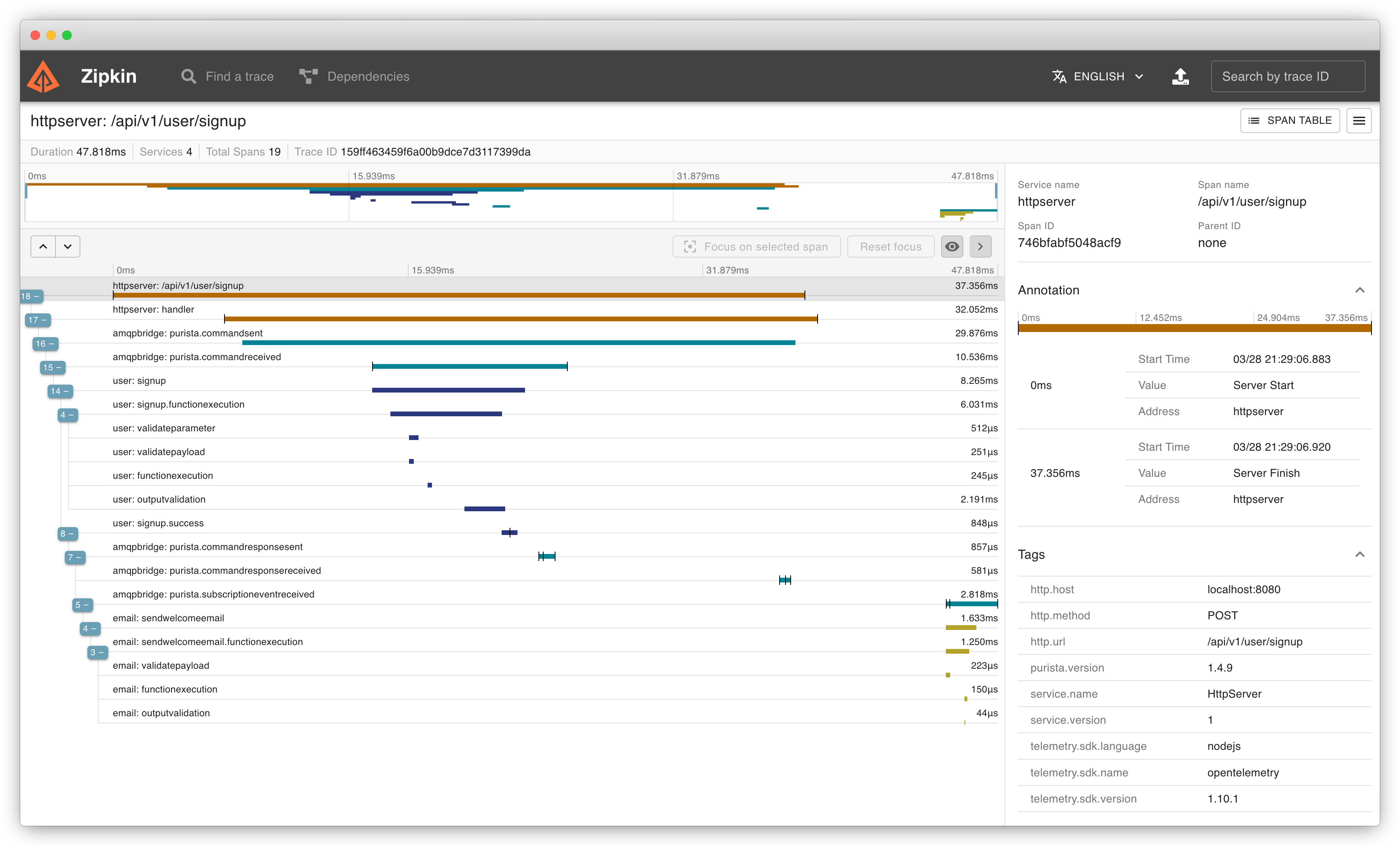
Zipkin is a lightweight distributed tracing system originally created at Twitter. Like Jaeger, a single Docker container gets you up and running immediately.
Install
npm install @opentelemetry/exporter-zipkin @opentelemetry/sdk-trace-nodeTypeScript setup
Zipkin uses its own wire protocol (not OTLP), so you use the dedicated Zipkin exporter.
import { ZipkinExporter } from '@opentelemetry/exporter-zipkin'
import { SimpleSpanProcessor } from '@opentelemetry/sdk-trace-node'

export function getSpanProcessor() {
  return new SimpleSpanProcessor(
    new ZipkinExporter({
      url: process.env.ZIPKIN_URL ?? 'http://localhost:9411/api/v2/spans',
    })
  )
}
Wire it into your application:
import { getSpanProcessor } from './tracing.js'
import { AmqpBridge } from '@purista/amqpbridge'

const spanProcessor = getSpanProcessor()

const eventBridge = new AmqpBridge({ spanProcessor })
await eventBridge.start()

const myService = await myV1Service.getInstance(eventBridge, { spanProcessor })
await myService.start()
Run it locally
The PURISTA repository includes a ready-made example in examples/fullexample.
# Start Zipkin container
npm run zipkin:up

# Start the example application pointing at Zipkin
npm run zipkin:start
Open the Zipkin UI at http://localhost:9411 and the OpenAPI UI at http://localhost:8080 to trigger commands and generate traces.
# Stop and clean up
npm run zipkin:down
Docker Compose snippet
services:
  zipkin:
    image: openzipkin/zipkin:latest
    ports:
      - "9411:9411"
Next steps
- Jaeger — similar UI, native OTLP support
- Grafana Tempo — integrate into existing Grafana stacks